Polymyalgia Rheumatica: Symptoms, Diagnosis, and What to Expect From Treatment
PMR is common in older adults, but nuanced enough that early misclassification can expose patients to unnecessary pain, prolonged prednisone, or missed giant cell arteritis. For patients, the central question is often simple: why did my shoulders and hips become so stiff almost overnight? For clinicians, the question is sharper: does this pattern represent polymyalgia rheumatica, and how should treatment relieve inflammation while limiting steroid harm?
Why PMR feels so abrupt
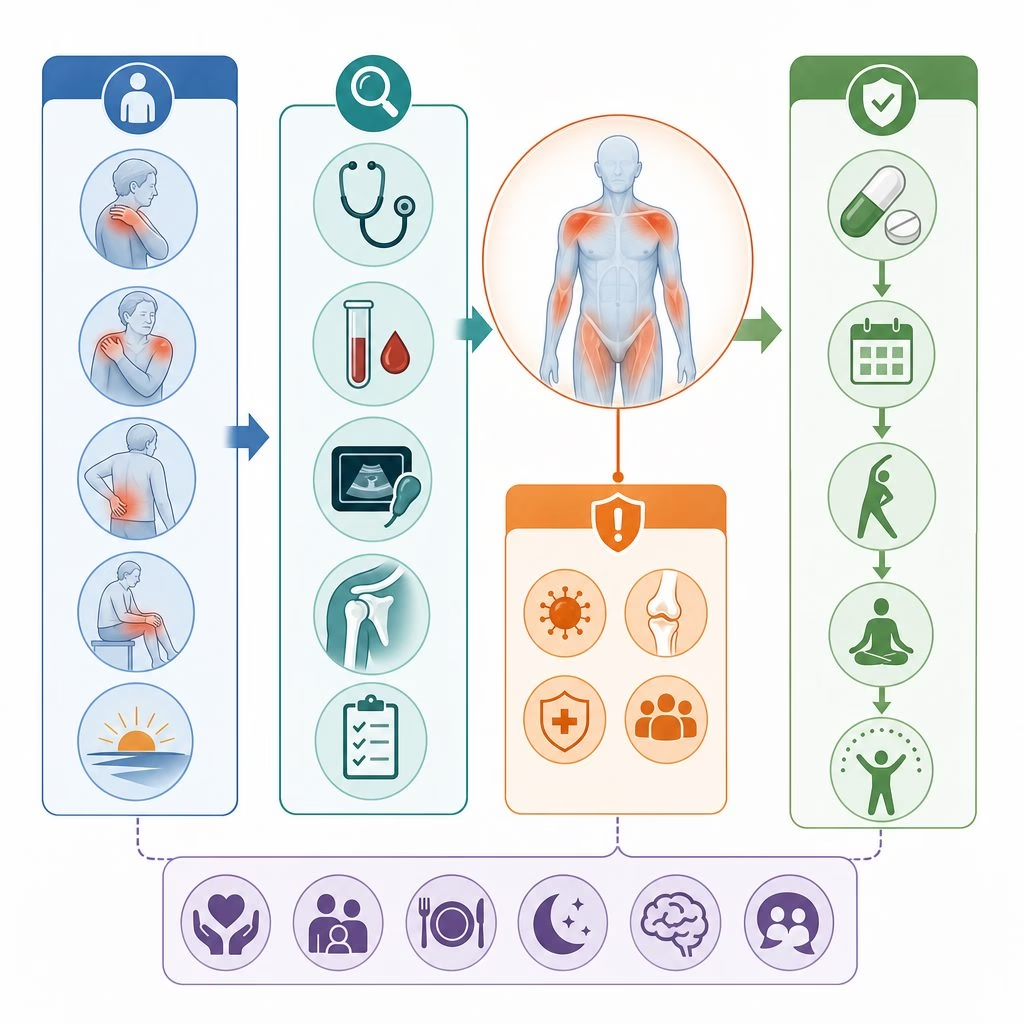
Polymyalgia rheumatica is an inflammatory syndrome that almost always begins after age 50, with peak incidence in the 70s. The typical symptom is bilateral aching and stiffness around the shoulder girdle, neck, and hip girdle. Morning stiffness often lasts more than 45 minutes, and patients may describe difficulty getting out of bed, raising arms to wash hair, or standing from a chair.
The abruptness is not imaginary. PMR is driven by innate immune activation, interleukin-6 signaling, and inflammation in periarticular structures such as bursae and tendon sheaths, not primary muscle disease. True muscle weakness is not the defining feature; pain inhibition can make people feel weak, but objective strength is usually preserved.
Recognizing the clinical pattern
A useful bedside scenario is a 73-year-old who was walking daily until six weeks ago. She now wakes at 4 a.m. because both shoulders ache, needs two hands on the armrest to stand, and feels substantially better by afternoon. She has no swollen small joints, rash, or focal neurologic deficit. That pattern matters clinically and diagnostically.
Findings that support PMR include:
- Age over 50, usually over 60.
- Bilateral shoulder pain with hip or neck stiffness.
- Marked morning stiffness and functional limitation.
- Elevated erythrocyte sedimentation rate or C-reactive protein, though occasional patients have modest values.
- Rapid improvement after appropriate glucocorticoid therapy, interpreted cautiously.
One common misconception is that PMR is diagnosed because prednisone works. Many painful conditions improve transiently with corticosteroids. The response is supportive only when the starting syndrome is right, inflammatory markers fit, and symptoms improve in a characteristic, measurable way.
Diagnosis is pattern recognition plus exclusion
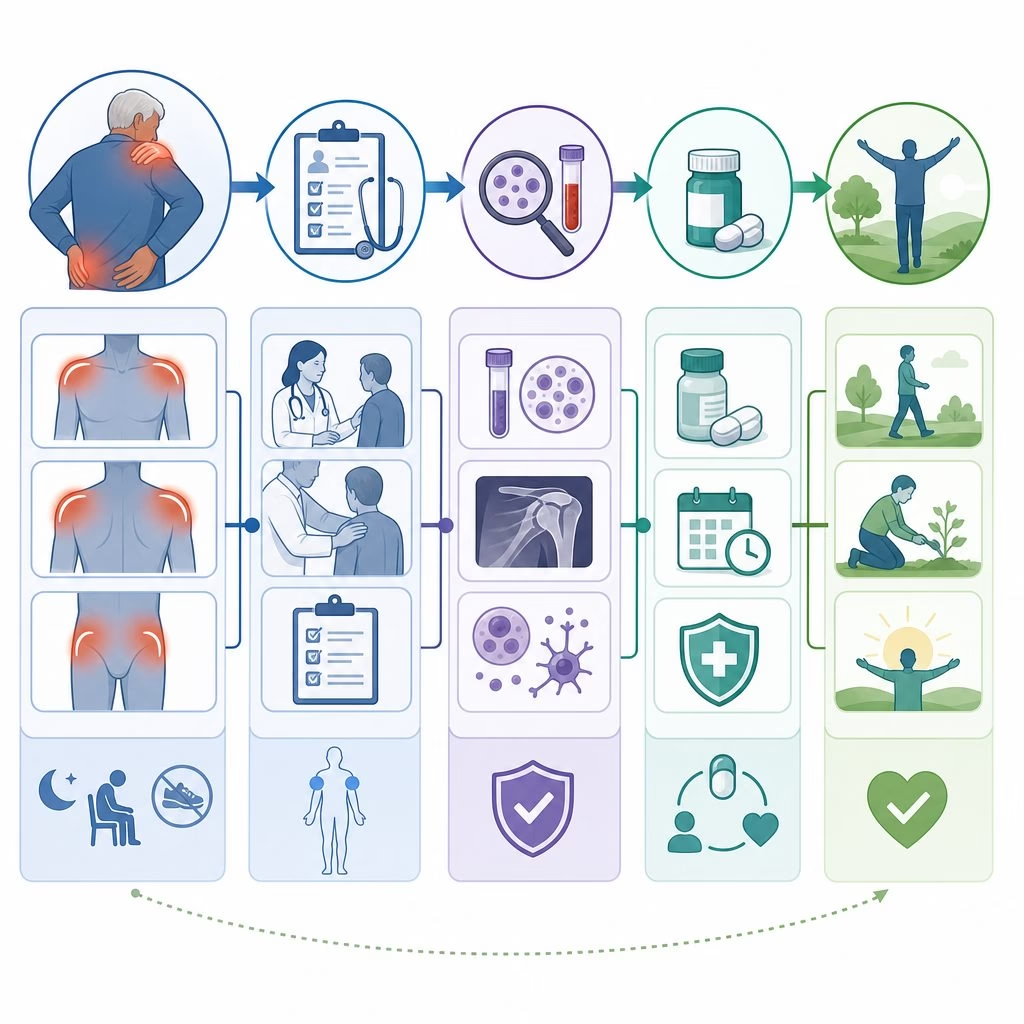
The 2012 ACR/EULAR provisional classification criteria were designed for research, not as a bedside diagnostic rule. Still, they clarify the reasoning: age 50 or older, bilateral shoulder aching, abnormal inflammatory markers, morning stiffness, hip involvement, absence of rheumatoid factor or anti-cyclic citrullinated peptide antibodies, and absence of other joint involvement increase the probability of PMR.
In practice, evaluation usually includes ESR, CRP, complete blood count, metabolic panel, creatine kinase when weakness is reported, thyroid testing when appropriate, and rheumatoid factor or anti-CCP when inflammatory arthritis is plausible. Ultrasound can show subdeltoid bursitis, biceps tenosynovitis, or hip synovitis, but imaging should answer a clinical question rather than replace judgment.
Do not miss giant cell arteritis
The most important linked condition is giant cell arteritis, a large-vessel vasculitis that can threaten vision. New headache, scalp tenderness, jaw claudication, visual symptoms, limb claudication, or unexplained constitutional symptoms change the risk calculation. The 2021 ACR/Vasculitis Foundation guideline supports prompt high-dose glucocorticoids when giant cell arteritis is suspected, with vascular imaging or temporal artery biopsy used to confirm the diagnosis.
Treatment: why prednisone works, and why tapering is deliberate
The 2015 EULAR/ACR PMR management recommendations emphasize the lowest effective glucocorticoid dose, individualized tapering, and early attention to relapse risk and medication toxicity. Many patients begin in the prednisone range of 12.5 to 25 mg daily, then taper gradually once pain, stiffness, function, ESR, and CRP improve. Very high doses should prompt reconsideration of the diagnosis or concern for giant cell arteritis.
The reason tapering is slow is biological and practical. PMR often relapses when steroid exposure falls faster than the inflammatory process has quieted. A flare during taper is not failure; it is information. The clinician asks whether symptoms match the original syndrome, whether markers rose, whether another diagnosis has emerged, and whether steroid-sparing therapy is justified.
Steroid-sparing options are no longer theoretical
Methotrexate has modest evidence and is considered for patients with high relapse or steroid risk. Interleukin-6 blockade has stronger recent data. In the phase 3 SAPHYR trial, sarilumab plus a 14-week taper achieved sustained remission more often than placebo plus a longer taper in relapsing PMR. The FDA approved sarilumab for adults with PMR who have had inadequate response to corticosteroids or cannot tolerate tapering. This does not make biologic therapy routine; it makes risk stratification more meaningful.
What to expect over time
Most patients improve substantially, but the course is measured in months to years, not days. Follow-up should track pain, morning stiffness, shoulder and hip function, inflammatory markers, prednisone dose, and adverse effects. Bone protection, vaccination review, diabetes and hypertension surveillance, and fall-risk reduction are not side issues; they are PMR care.
Where the evidence stands
Evidence supports diagnosing PMR by pattern, inflammatory context, and vigilant exclusion of giant cell arteritis. Prednisone remains effective, but tapering should be intentional, toxicity-aware, and reconsidered when relapses recur. Uncertainty remains around which patients should receive early biologic therapy and how imaging can best personalize risk.
Medically reviewed by Dr. Adam Elisha, DO, board-certified rheumatologist in Duluth, MN.