Rheumatoid Arthritis Treatment in Duluth, MN
Rheumatoid arthritis (RA) is a chronic autoimmune disease that causes the immune system to mistakenly attack the joints, leading to pain, swelling, stiffness, and — without proper treatment — lasting joint damage. Unlike osteoarthritis, which results from wear and tear, RA is driven by inflammation that can affect joints throughout the body and, in some cases, internal organs as well. If you have been diagnosed with RA or are seeking a specialist for ongoing care, Dr. Adam Elisha, DO — a board-certified rheumatologist in Duluth, MN — provides comprehensive rheumatoid arthritis treatment tailored to each patient’s needs.
What Is Rheumatoid Arthritis?
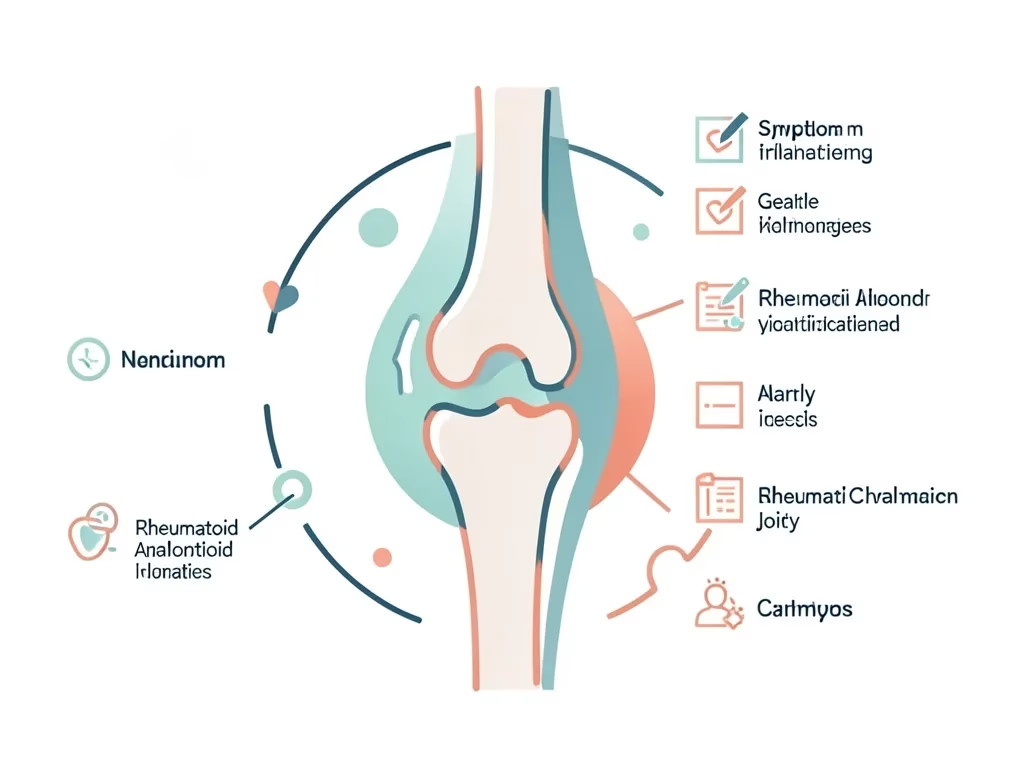
Rheumatoid arthritis occurs when the immune system attacks the synovium — the lining of the membranes that surround your joints. This triggers inflammation that can thicken the synovium and, over time, destroy the cartilage and bone within the joint. RA most commonly affects the small joints of the hands, wrists, and feet, though larger joints such as the knees, shoulders, and hips can also be involved. Symptoms typically develop symmetrically, meaning both sides of the body are affected at the same time. Morning stiffness lasting more than an hour is a hallmark feature.
RA is also a systemic disease, which means inflammation can extend beyond the joints to affect the skin, eyes, lungs, heart, and blood vessels. This is why ongoing monitoring and comprehensive management are so important.
Diagnosing Rheumatoid Arthritis
Common diagnostic tools include:
- Blood tests: Rheumatoid factor (RF) and anti-cyclic citrullinated peptide antibodies (anti-CCP) are the most specific markers for RA. Inflammatory markers such as C-reactive protein (CRP) and erythrocyte sedimentation rate (ESR) help gauge disease activity.
- Imaging: X-rays can detect joint damage and erosions. Ultrasound and MRI may be used to identify early inflammation before visible damage appears on X-ray.
- Clinical criteria: Joint count, symptom duration, and laboratory findings are combined using standardized classification criteria to confirm diagnosis.
Why Early Treatment Matters
The most important thing to understand about RA is that early, aggressive treatment leads to better long-term outcomes. Uncontrolled inflammation damages cartilage and bone — changes that cannot be reversed. Starting treatment promptly can slow or halt this damage, preserve joint function, and significantly improve quality of life.
Rheumatologists use a strategy called treat-to-target, which means setting a clear goal — typically remission or low disease activity — and adjusting medications until that goal is reached.
Rheumatoid Arthritis Treatment Options
Conventional DMARDs
Disease-modifying antirheumatic drugs (DMARDs) are the foundation of RA treatment.
- Methotrexate — the most commonly used conventional DMARD, typically taken once a week
- Hydroxychloroquine (Plaquenil) — a milder DMARD often used in early or less severe RA
- Sulfasalazine — used alone or in combination therapy
- Leflunomide (Arava) — an alternative for patients who cannot tolerate methotrexate
Biologic DMARDs
Biologic medications target specific proteins in the immune system responsible for driving inflammation.
- TNF inhibitors: etanercept (Enbrel), adalimumab (Humira), infliximab (Remicade)
- IL-6 inhibitors: tocilizumab (Actemra)
- B-cell depletion: rituximab (Rituxan)
- T-cell costimulation blockade: abatacept (Orencia)
JAK Inhibitors
Janus kinase (JAK) inhibitors are oral targeted medications that reduce inflammation and offer an alternative to injectable biologics.
- Tofacitinib (Xeljanz)
- Upadacitinib (Rinvoq)
- Baricitinib (Olumiant)
Corticosteroids
Corticosteroids such as prednisone are most useful as short-term bridge therapy when starting a new DMARD or during a flare. Long-term use is avoided when possible due to side effects including bone loss, weight gain, and elevated blood sugar.
NSAIDs
NSAIDs such as ibuprofen and naproxen help manage pain and stiffness but do not slow the underlying disease. They may be used alongside DMARDs for symptom relief.
Monitoring and Long-Term Management
- Periodic blood tests to check inflammatory markers and medication safety
- Joint exams to assess swelling, tenderness, and range of motion
- Imaging to monitor for joint damage over time
- Screening for comorbidities including cardiovascular disease and osteoporosis
When to See a Rheumatologist About Rheumatoid Arthritis
See a rheumatologist promptly if you have swelling in several small joints, especially the hands, wrists, or feet, morning stiffness lasting more than an hour, or symmetric joint pain with fatigue. Early referral matters because starting disease-modifying treatment within the first months of symptoms gives the best chance to prevent permanent joint damage. You do not need a confirmed diagnosis to be seen; that is what the evaluation is for.
Frequently Asked Questions About Rheumatoid Arthritis
Is rheumatoid arthritis curable?
There is no cure yet, but RA is highly treatable. With modern disease-modifying drugs and a treat-to-target approach, many patients reach remission or low disease activity and avoid joint damage.
What is the difference between rheumatoid arthritis and osteoarthritis?
RA is an autoimmune disease that causes symmetric joint swelling, prolonged morning stiffness, and can affect organs. Osteoarthritis is wear-and-tear damage to cartilage, usually without the systemic inflammation or the long morning stiffness seen in RA.
What is the best medication for rheumatoid arthritis?
Methotrexate is the usual first-line anchor drug. If it does not control the disease, a biologic or a JAK inhibitor is added or substituted. The right choice is individualized to your disease activity, other conditions, and response to treatment.
Can I stop my RA medication once I feel better?
Stopping suddenly often triggers a flare. Feeling well usually means the medication is working. Any tapering should be gradual and guided by your rheumatologist while disease activity is monitored.
Related Rheumatology Resources
- Rheumatoid Arthritis Symptoms: What to Watch For
- RA vs Osteoarthritis: Understanding the Difference
- Methotrexate: Why It Remains the Anchor DMARD
- Conditions We Treat
Rheumatoid Arthritis Care in Duluth, MN
If you are looking for a rheumatoid arthritis specialist in Duluth or the surrounding area, Dr. Adam Elisha at St. Luke’s Rheumatology Associates provides comprehensive evaluation and ongoing treatment for RA. Call (218) 249-6960 to schedule an appointment, or ask your primary care provider for a referral to rheumatology.
St. Luke’s Rheumatology Associates
1000 E 1st St, Suite 302
Duluth, MN 55805