Hydroxychloroquine dosing and retinal toxicity: the updated guidance
Hydroxychloroquine remains one of rheumatology’s most useful medications, particularly for systemic lupus erythematosus and some patients with rheumatoid arthritis. The clinical problem is not whether it works; it does. The question is how to preserve its benefits while minimizing the rare but serious risk of retinal toxicity, an injury that can be irreversible once established.
Why dosing guidance changed
For years, hydroxychloroquine was commonly dosed at 400 mg daily, sometimes adjusted using “ideal body weight.” The American Academy of Ophthalmology’s 2016 recommendations, reinforced by the 2020 joint statement from the ACR, American Academy of Dermatology, Rheumatologic Dermatology Society, and AAO, moved the field toward actual body weight dosing: no more than 5 mg/kg/day.
That change matters because retinal risk tracks most consistently with daily dose and duration. At recommended doses, the AAO estimates toxicity risk is under 1% during the first five years and under 2% through ten years. After twenty years, risk approaches 20%, although many long-term users still do not develop toxicity.
The practical dosing calculation
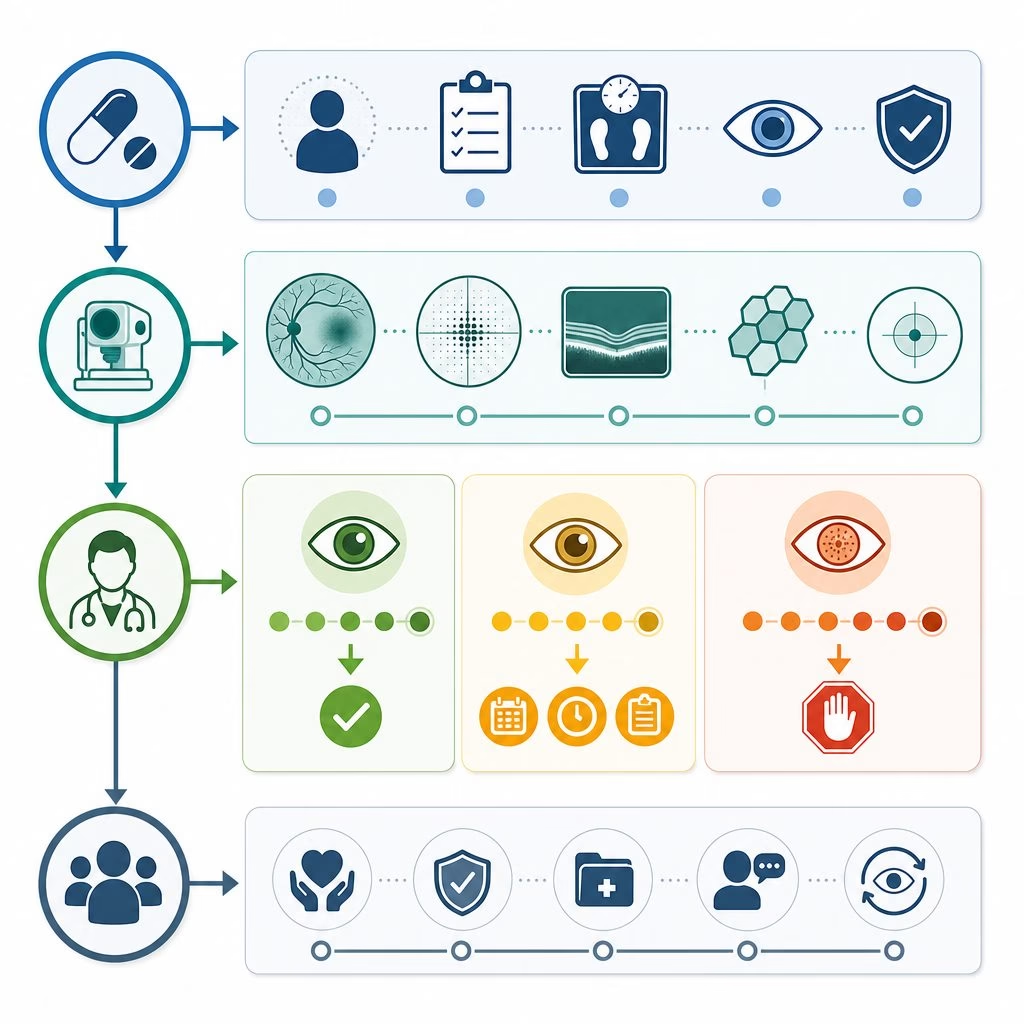
The key calculation is simple: multiply actual body weight in kilograms by 5. A patient weighing 70 kg has a recommended ceiling of 350 mg/day. Because tablets are usually 200 mg, clinicians often use practical schedules, such as 200 mg daily or alternating 200 mg and 400 mg on different days to average 300 mg/day.
This is not a “one size fits all” rule. In lupus, hydroxychloroquine reduces flares, improves skin and joint disease, supports pregnancy outcomes, and is associated with lower thrombosis and organ damage accrual in observational cohorts. Underdosing can have consequences. The art is staying within safer exposure ranges while maintaining disease control.
A clinical example
Consider a 55-year-old woman with lupus weighing 62 kg. Her calculated ceiling is 310 mg/day. If she has stable disease on 400 mg daily, the updated approach would prompt a thoughtful discussion: could she average 300 mg/day without flare? Does she have nephritis or active inflammatory arthritis? What is her kidney function? Has ophthalmology found early structural change on optical coherence tomography, or OCT, a retinal imaging test?
The answer is not automatic discontinuation. It is risk stratification. In a patient with active lupus and normal screening, dose reduction may be reasonable but should be monitored clinically and serologically, including complements and anti-dsDNA when relevant.
Who needs closer monitoring?
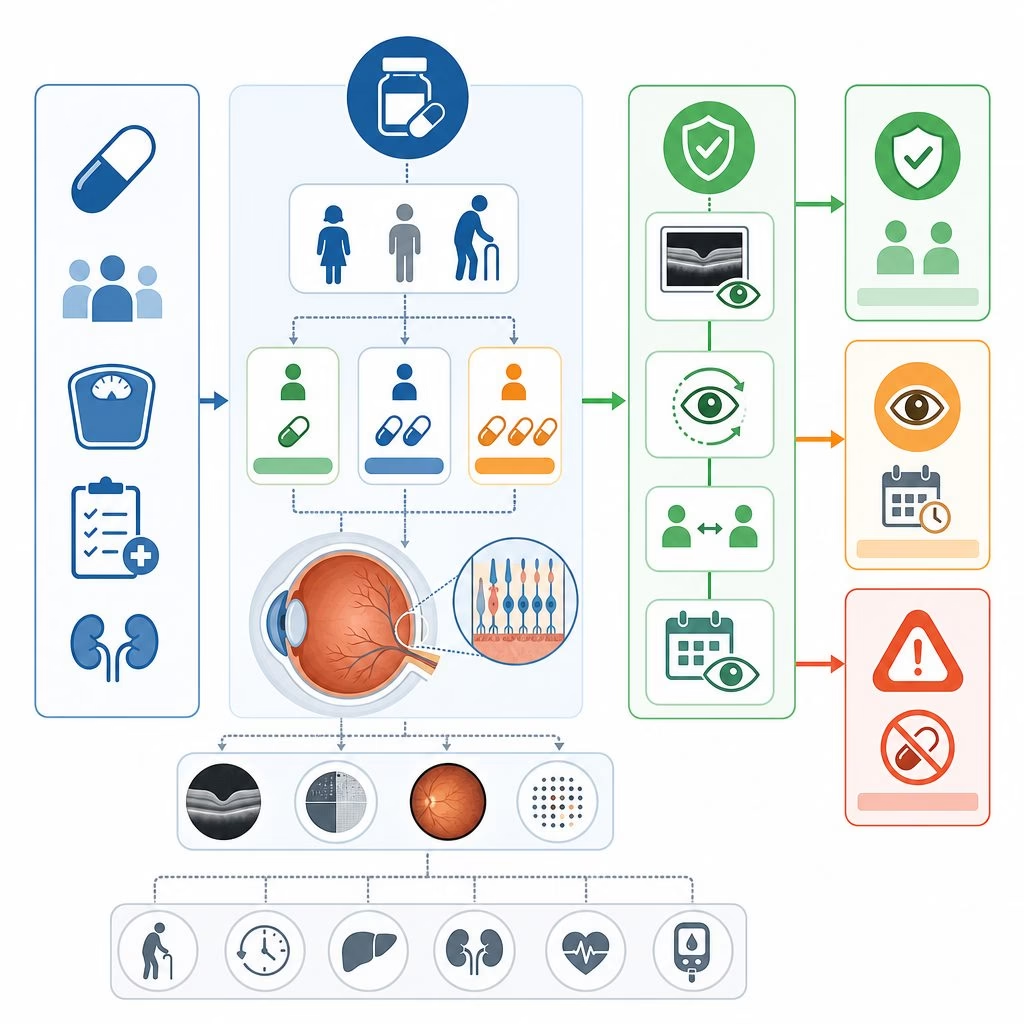
The highest-risk patients are not simply those who have taken hydroxychloroquine a long time. Duration matters, but several factors meaningfully change risk:
- Daily dose above 5 mg/kg actual body weight
- Use longer than five years
- Reduced kidney function, which increases drug exposure
- Concurrent tamoxifen use
- Pre-existing macular disease that limits retinal reserve or complicates interpretation
For patients without major risk factors, baseline retinal examination is recommended within the first year, with annual screening usually beginning after five years. Higher-risk patients should start annual screening earlier. Modern screening relies on spectral-domain OCT and automated visual fields; fundus autofluorescence or multifocal electroretinography can clarify uncertain findings.
Common misconception: normal vision means the retina is safe
Early hydroxychloroquine toxicity is often asymptomatic. A patient may read normally and still have subtle parafoveal thinning on OCT or reproducible visual field defects. By the time central vision changes are obvious, damage may be advanced.
Another misconception is that every abnormal eye test proves toxicity. Dry eye, cataract, testing fatigue, glaucoma, and unrelated macular disease can produce confusing results. That is why reproducibility matters. A single borderline field should usually be repeated and correlated with structural imaging before changing an effective systemic medication.
What happens if toxicity is suspected?
Once definite toxicity is identified, stopping hydroxychloroquine is generally recommended because progression can continue even after discontinuation. However, “definite” is the important word. Rheumatologists and ophthalmologists should distinguish probable toxicity from nonspecific abnormalities, especially in patients whose lupus control depends on therapy.
When hydroxychloroquine must be stopped, substitution is disease-specific. In lupus, alternatives may include optimizing sun protection, topical or systemic therapies for skin disease, immunosuppressive agents for organ involvement, or biologic therapy in selected patients. None replicates hydroxychloroquine’s full risk-benefit profile.
Where the field still has questions
Uncertainty remains around individualized blood-level monitoring, intermittent dosing schedules, and how best to balance flare prevention against retinal risk in patients near the 5 mg/kg threshold. There is also ongoing interest in whether pharmacogenomics or cumulative exposure models can predict toxicity more accurately than weight-based dosing alone.
The current evidence supports a practical middle ground: hydroxychloroquine should be respected, not feared. Updated dosing and retinal screening guidance allow clinicians to preserve a medication with substantial autoimmune benefits while reducing the chance of preventable vision loss.
Medically reviewed by Dr. Adam Elisha, DO, board-certified rheumatologist in Duluth, MN.