What complement levels actually tell us in lupus
In systemic lupus erythematosus, a low C3 or C4 result can change the tone of a visit. Patients often read it as proof that lupus is “active,” while clinicians know the result is useful but incomplete. Complement testing matters because it sits at the intersection of mechanism, monitoring, and risk: it can support a diagnosis, suggest immune-complex inflammation, and help interpret kidney or skin flares, but it rarely answers the clinical question by itself.
Complement is a pathway, not a single lupus score
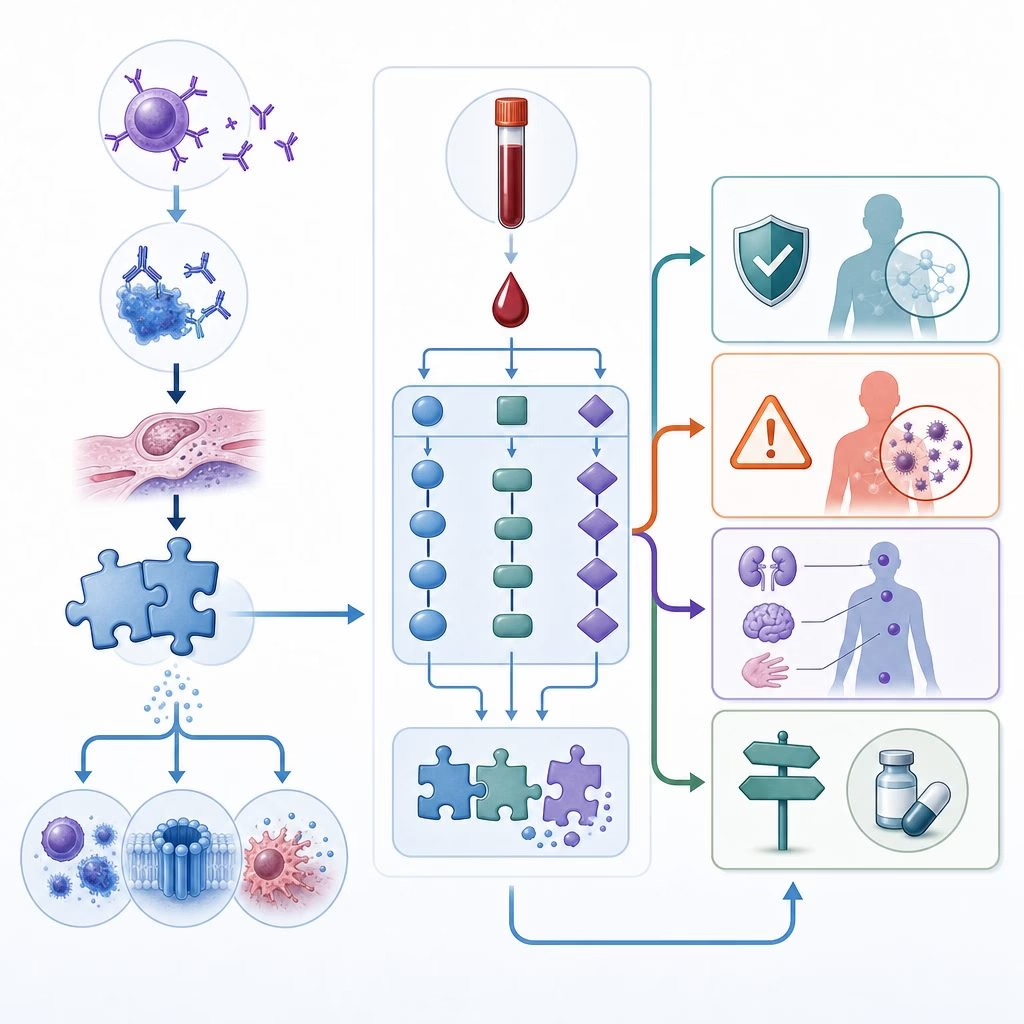
The complement system is a set of circulating proteins that helps clear microbes, apoptotic cell debris, and immune complexes. In lupus, antibodies can bind self-antigens and form immune complexes that activate the classical complement pathway. C3 and C4 are the common blood tests; CH50 is a functional assay of the classical pathway. When complement is consumed faster than the liver replaces it, levels may fall.
That mechanism is why low complement appears in the 2019 EULAR/ACR lupus classification criteria, with low C3 or C4 adding weight and low C3 plus low C4 adding more. Classification criteria are not diagnostic rules, however. They help create research cohorts; bedside diagnosis still requires pattern recognition, exclusion of mimics, and organ-specific assessment.
What low levels can tell us
Low C3 and C4 most strongly suggest activation of the classical pathway, which is typical of immune-complex disease. In practical terms, they raise concern for lupus nephritis, serositis, vasculitic skin lesions, or hematologic activity when the history and examination point that way. They also help distinguish inflammatory lupus activity from medication adverse effects, infection, or noninflammatory pain when other data are aligned.
The kidney example
Consider a patient with known lupus who develops ankle swelling, rising urine protein, microscopic hematuria, a positive anti-double-stranded DNA antibody, and falling C3 and C4. The complement results do not prove nephritis, but they strengthen the pretest probability that immune-complex activity is driving the kidney findings. That is different from a patient with stable urinalysis, no inflammatory symptoms, and an isolated mildly low C4 that has been unchanged for years.
EULAR’s 2023 lupus management recommendations emphasize regular assessment of disease activity, organ damage, urinalysis, proteinuria, anti-dsDNA, and complement. The point is serial interpretation. A single value is a snapshot; a trend alongside objective organ data is a clinical signal.
What normal levels do not rule out
Normal complement does not exclude active lupus. Some patients flare without measurable consumption. Others have inflammation mediated by pathways that are not captured well by C3 and C4. The liver can also increase complement production during systemic inflammation, partially masking consumption. Conversely, genetically low C4 copy number can make C4 chronically low even when lupus is quiet.
The opposite misconception is also common: any low complement means treatment should be escalated. That is too simplistic. Treatment decisions should be anchored to organ threat and validated activity measures, not laboratory anxiety. A stable, asymptomatic patient with low C4 alone may need observation and context. A patient with new proteinuria and falling C3 deserves a very different level of concern.
How complement fits with treatment reasoning
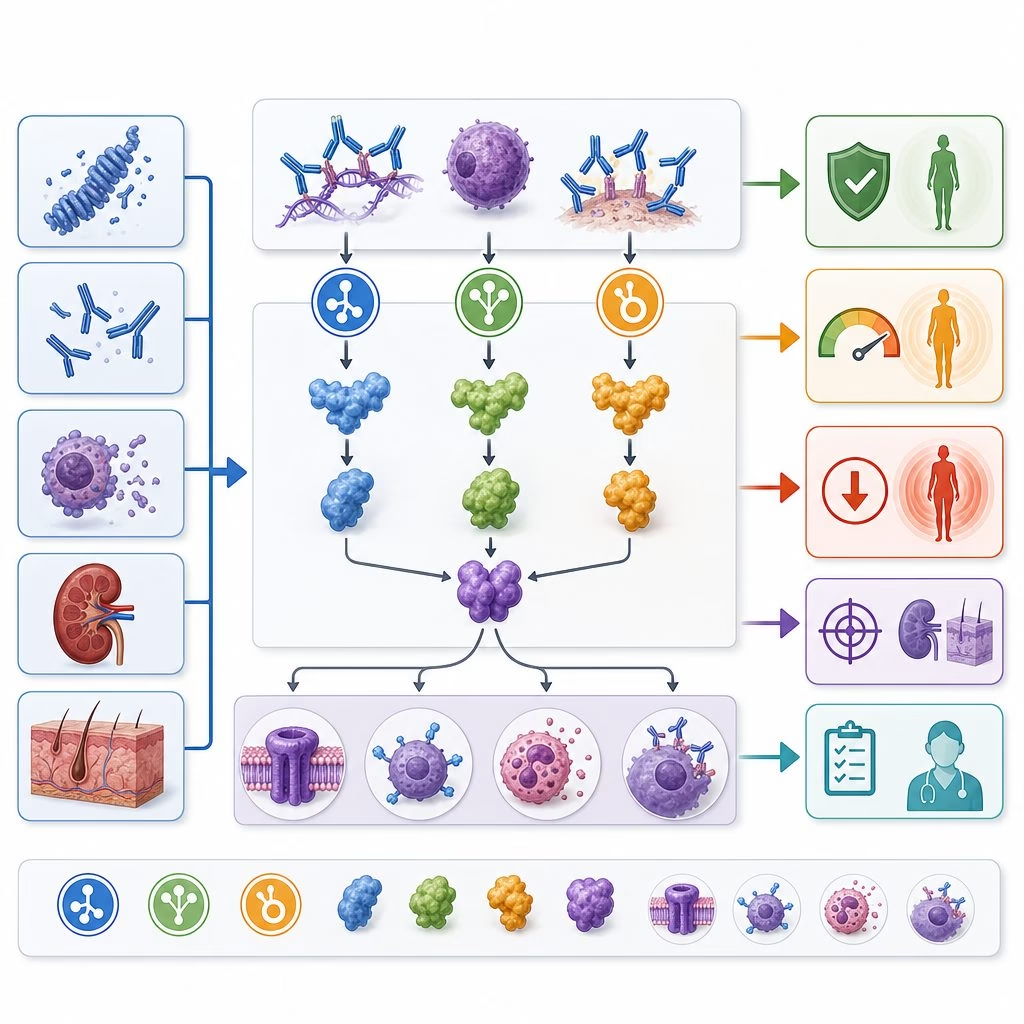
In lupus nephritis, complements are part of a larger decision set that includes urine sediment, protein quantification, kidney function, biopsy class when indicated, anti-dsDNA, blood pressure, pregnancy plans, and infection risk. ACR kidney guidance and EULAR recommendations favor early, organ-directed immunosuppression for active nephritis, typically using glucocorticoids with agents such as mycophenolate, cyclophosphamide, belimumab, or voclosporin depending on severity and context.
Complement changes may support the decision to intensify therapy, but they should not be the sole endpoint. Trials of belimumab in systemic lupus and lupus nephritis, including BLISS-LN, showed better renal and disease activity outcomes in selected patients, and analyses often track complement normalization. Still, a patient’s urine protein, kidney function, symptoms, and adverse effects matter more than making C3 look prettier on paper.
Practical interpretation
Most useful patterns include:
- Falling C3 and C4 with rising anti-dsDNA and new objective organ findings.
- Persistently low C4 with stable symptoms and stable urinalysis, suggesting baseline biology.
- Improving complement with improving urine protein or rash, supporting response but not proving remission.
Where the evidence leaves us
Complement levels are best understood as biomarkers of immune-complex activity, not verdicts. Low or falling C3 and C4 can sharpen suspicion for active lupus, especially nephritis, and serial trends can help judge response. Normal results do not rule out disease, and abnormal results do not automatically mandate escalation. The open questions are how to combine traditional complement tests with newer markers, and how to personalize monitoring so treatment follows organ risk rather than lab noise.
Medically reviewed by Dr. Adam Elisha, DO, board-certified rheumatologist in Duluth, MN.