B-cell depletion in lupus nephritis: who, when, and why
Why this question matters now
Lupus nephritis forces patients and clinicians to make high-stakes decisions before certainty arrives. Proteinuria, hematuria, complement consumption, and anti-double-stranded DNA trends can suggest immune activity, but kidney biopsy class, chronic damage, infection risk, fertility plans, and prior treatment response determine how aggressive therapy should be. B-cell depletion matters because B cells help produce autoantibodies, present antigen, and organize inflammatory signaling inside the kidney. The question is no longer whether B cells are relevant; it is which patients need depletion, at what point, and for what measurable goal.
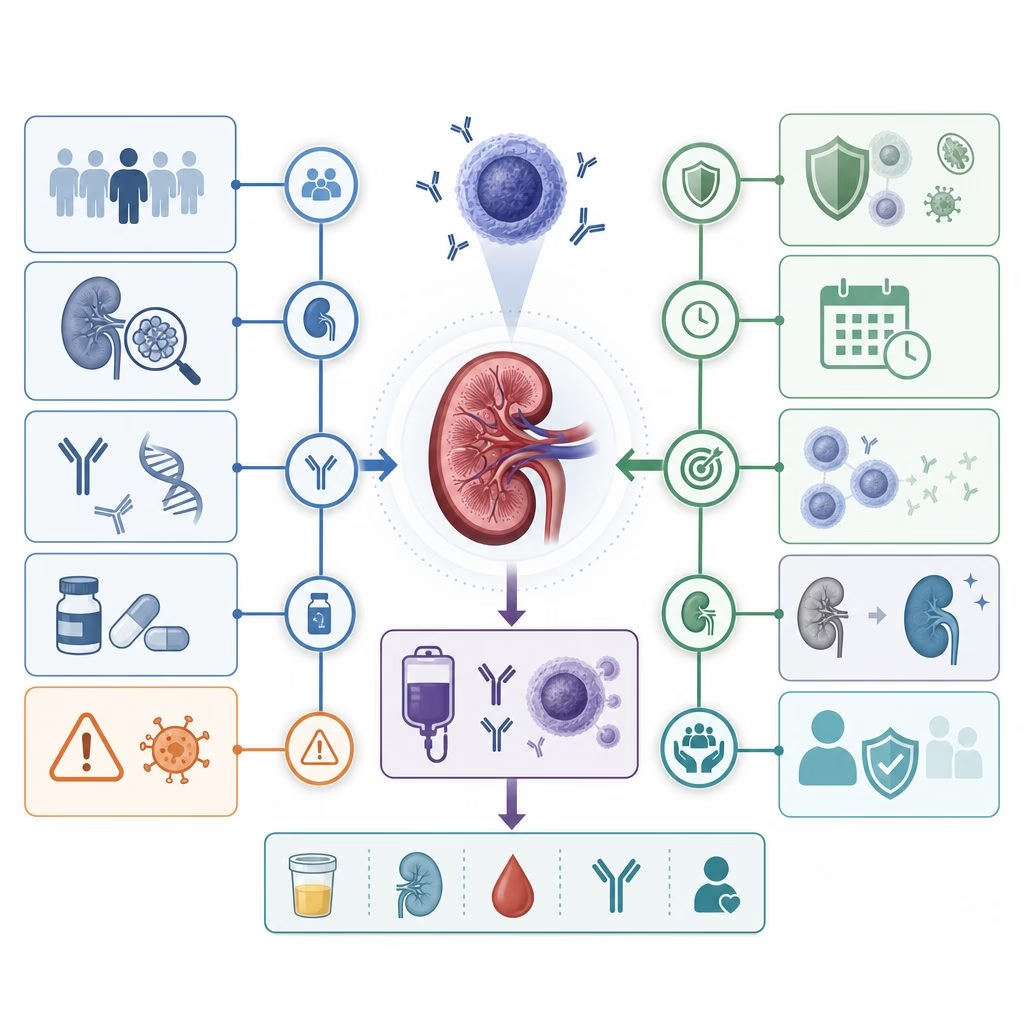
What B-cell depletion is trying to accomplish
Rituximab and obinutuzumab target CD20, a surface marker on many B cells. Plasma cells, which secrete established antibodies, usually do not express CD20, so depletion is not an instant off-switch for lupus. Instead, the intent is to interrupt renewal of autoreactive B-cell populations and reduce the immune amplification that sustains nephritis.
This distinction explains why B-cell depletion is typically paired with background therapy rather than used as a lonely intervention. Hydroxychloroquine, renin-angiotensin system blockade when appropriate, glucocorticoid minimization, mycophenolate or cyclophosphamide, and newer add-ons such as belimumab or voclosporin all address different pieces of risk. The 2024 American College of Rheumatology lupus nephritis guideline emphasizes early combination therapy for active class III, IV, or V disease and faster steroid tapering, reflecting the field’s move away from prolonged high-dose prednisone.
Who is most likely to be considered
B-cell depletion is usually considered in three overlapping groups. First are patients with proliferative lupus nephritis who have persistent proteinuria, active urine sediment, or serologic activity despite well-delivered induction therapy. Second are patients with relapsing disease, especially when repeated steroid bursts are accumulating harm. Third are patients whose extrarenal lupus, such as inflammatory arthritis, cytopenias, or refractory skin disease, points to broader B-cell driven activity.
Clinical features that shape the decision
- Biopsy class and chronicity: active inflammation is more treatable than established scar.
- Trajectory: falling proteinuria over months differs from stalled or rising proteinuria.
- Safety: prior serious infection, hypogammaglobulinemia, pregnancy plans, and vaccination status change the risk-benefit calculation.
- Adherence and access: infusion schedules can help some patients and burden others.
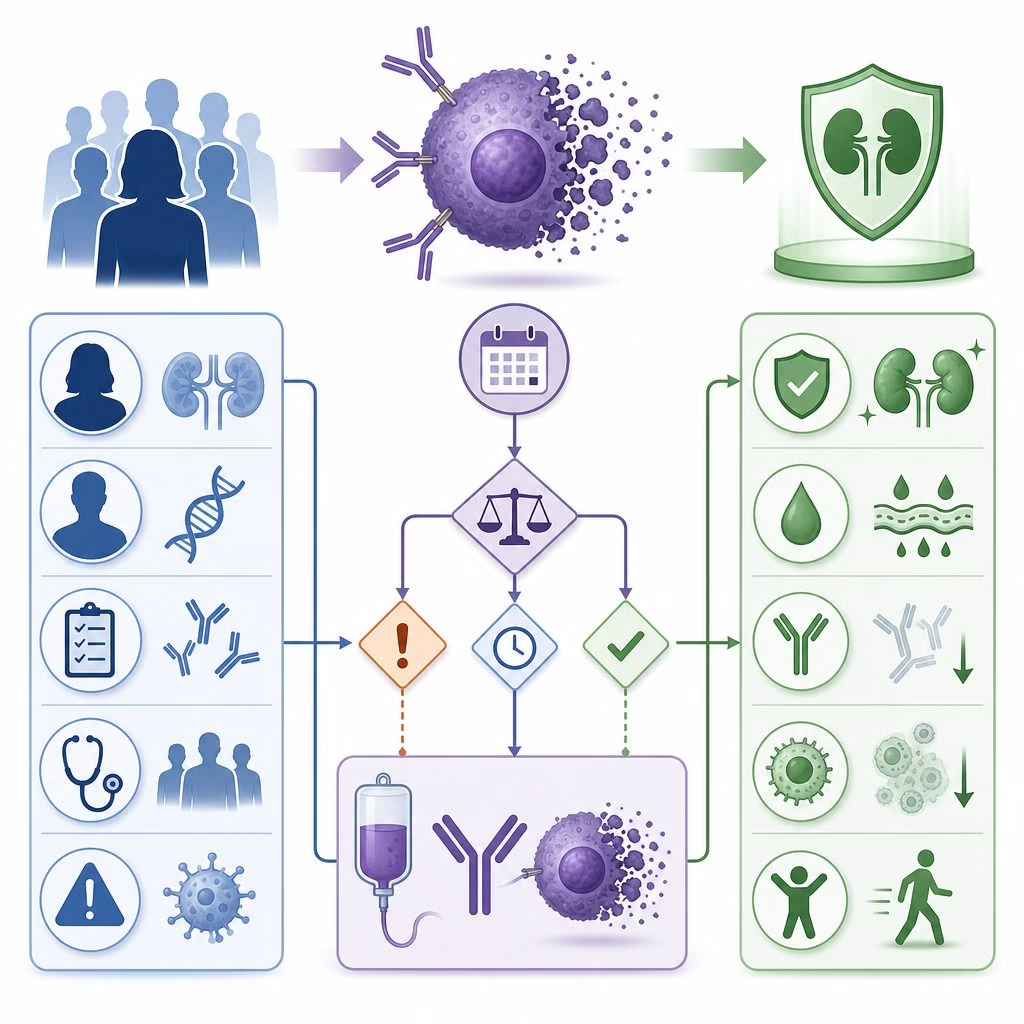
When to use depletion: rescue, add-on, or planned intensification
Historically, rituximab lived in the “refractory lupus nephritis” category because randomized trials did not clearly prove benefit when added to mycophenolate and steroids. The LUNAR trial, published in 2012, improved several serologic markers but missed its primary renal response endpoint. That negative result should not be read as proof that B-cell depletion never works; rather, it showed how hard lupus nephritis trials are when background therapy is strong, endpoints are rigid, and patients are biologically diverse.
Obinutuzumab, a type II anti-CD20 antibody that produces deeper peripheral B-cell depletion than rituximab, has sharpened the discussion. In the NOBILITY phase 2 trial, obinutuzumab added to mycophenolate and steroids increased complete renal response at weeks 76 and 104 compared with placebo. The phase 3 REGENCY program has further supported this strategy in active lupus nephritis, making CD20 depletion a more evidence-based option than it was a decade ago.
Timing still matters. If creatinine is rising, urine sediment is active, and biopsy shows crescents, waiting six months to declare failure may cost nephron mass. Conversely, isolated residual proteinuria after inflammation has quieted may reflect damage or podocyte stress, not ongoing B-cell activity.
A practical example
Consider a 32-year-old with class IV lupus nephritis treated with hydroxychloroquine, mycophenolate, and a tapering steroid regimen. At three months, anti-DNA antibodies and complements improve, creatinine is stable, and proteinuria falls from 4.8 to 1.6 grams daily. That is incomplete, but the direction is reassuring. B-cell depletion might be held in reserve while therapy continues.
Now change the scenario: proteinuria remains above 4 grams, complements stay low, urine sediment is active, and adherence is confirmed. Here, the clinical question shifts from patience to escalation. Depleting B cells becomes reasonable because the pattern suggests persistent immunologic nephritis rather than slow healing.
Common misconception: depletion replaces the rest of lupus care
A frequent misconception is that an infusion “wipes out lupus.” It does not. CD20 therapy reduces selected B-cell populations for months, but monitoring remains essential: urine protein, serum creatinine, urinalysis, complements, anti-DNA antibodies, immunoglobulin levels, hepatitis B screening, vaccination timing, and infection history all matter. The goal is not laboratory perfection; it is durable renal preservation with the lowest feasible steroid exposure.
Where the evidence stands
B-cell depletion is best viewed as intensification for active, high-risk, or relapsing nephritis. Uncertainty remains about sequencing, retreatment intervals, biomarkers, and balancing depletion against infection risk.
Medically reviewed by Dr. Adam Elisha, DO, board-certified rheumatologist in Duluth, MN.